Stick vs Upright Vacuums: Which Fits Your Home?
A stick vacuum is light and stores easily but has a small dirt cup and less suction, while an upright is heavier and bulkier but cleans deep and holds more dirt. Pick a stick for quick pickups and tight storage; pick an upright for whole-home deep cleaning and pets.
On this page (8 sections)
- What is the difference between a stick and an upright vacuum?
- How do weight and storage space compare?
- Which one cleans carpets and hard floors better?
- How do dirt capacity and emptying compare?
- Are stick vacuums easier to use on stairs?
- Which design suits homes with pets?
- How do corded and cordless power compare?
- Stick vs upright: which should you choose?
The difference between a stick and an upright vacuum comes down to weight, power, and storage. A stick vacuum is light and slim for quick pickups, while an upright is heavier and bulkier for deep cleaning.
Both clean the same floors. The choice depends on how much carpet you have, how many stairs you climb, and where the vacuum will live between uses.
What is the difference between a stick and an upright vacuum?
A stick vacuum is a light, slim machine you push or carry; an upright is a heavier, self-standing machine built around a wide cleaning head. The stick trades power and capacity for weight and storage space.
A stick usually weighs under 8 pounds and often under 4. Many run on a battery, though corded models exist.
Its dirt cup is small, so you empty it more often.
An upright carries its motor over a wide base that stands on its own. It holds more dirt, cleans deeper into carpet, and often converts to hose-and-tool cleaning.
That extra ability comes with more weight to push and more room to store.
Our explainer on what an upright vacuum means covers the parts and how the design works.
How do weight and storage space compare?
Stick vacuums win on weight and storage; uprights take more room and more effort to move. Weight is the first thing you notice when you carry a vacuum between floors or rooms.
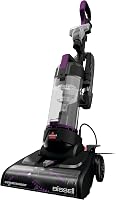
The Bissell 2033M Featherweight weighs 3.6 pounds and measures 8.3 x 9.5 x 44.1 inches. That light body suits apartments and dorm rooms, and it's easy to carry up a staircase.
Its slim stick shape also slides into a closet corner or beside a fridge.
The Shark Stratos AZ3002 weighs 16.7 pounds at 12.2 x 11.02 x 46.46 inches. The Dyson Ball Animal 3 weighs 17.3 pounds at 15.51 x 11.02 x 42.17 inches.
Both stand upright on their base, so storage means a closet corner rather than a hook. The Shark Stratos also stands taller than the stick, which matters if your storage spot has a low shelf.
If you live alone in a small place, a stick you can grab in seconds gets used more. In a house with several carpeted rooms, the heavier machine's stability matters more than its weight.
Which one cleans carpets and hard floors better?
Uprights clean deeper into carpet; sticks handle hard floors and area rugs well. An upright's weight presses the cleaning head down, and its wider brushroll digs into pile.
The Shark Stratos uses DuoClean PowerFins HairPro, two brushrolls that engage both carpets and hard floors. Shark says it delivers the best hair pickup of any Shark vacuum.
The two-roll design means one roll grips carpet fibers while the other contacts bare floors, so you can cross from rug to tile without swapping heads.
The Dyson Ball Animal 3 adds three suction modes for deep-pile carpet, low-pile carpet and large debris, and hard floors. Dyson's Motorbar head clears wrapped hair from the brush bar as it cleans.
The Bissell Featherweight is built for quick pickups on sealed hard floors and area rugs. Its power suits surface dirt, not deep carpet grooming.
On thick carpet, a stick like this one skims where an upright would lift the pile.
What do the brushroll and suction specs tell you?
The two uprights here are built around powered brushrolls, and the stick is built for light surface work. The Shark's DuoClean pair and the Dyson's Motorbar are both designed to agitate carpet fibers.
The Bissell's cleaning head sits on a 3.6 pound body with 1.4 amps of power. That is enough for crumbs and dust on a sealed floor, not for pulling grit from deep pile.
Match the head to the floor before you match the brand to the room.
How do dirt capacity and emptying compare?
Uprights hold more dirt and need fewer trips to the bin; sticks fill fast because their cups are small. Capacity matters most in larger homes and homes with pets.
The Bissell Featherweight has a 0.67 liter dirt cup. That's fine for a quick kitchen or entryway pass, but a full-house clean means emptying it partway through.
The clear cup lets you watch the fill level so you are not guessing when to stop.
The Shark Stratos holds 1.48 quarts and empties with a removable cup. The Dyson Ball Animal 3 holds 0.55 gallons.
The Shark holds about twice as much as the stick, and the Dyson holds about three times as much.
If you vacuum daily in a pet home, a larger cup saves time. In a small apartment with hard floors, a small cup emptied often costs you a few seconds and little else.
Are stick vacuums easier to use on stairs?
Sticks are easier to carry up stairs, while uprights need a detachable pod or hose to clean them well. Stair cleaning is where the weight gap shows most.
The Bissell Featherweight converts from a stick to a hand vacuum to a stair vacuum. With its crevice tool and floor nozzle, you can do treads and risers without balancing a heavy base on a step.
The Shark Stratos detaches its pod for motorized cleaning and its nozzle for stairs and upholstery. The Dyson Ball Animal 3 includes a stair tool and a hose with up to 50 ft of total reach.
That reach lets you leave the machine on the landing and still clean a full flight with the tool.
A full staircase in a two-story home favors the stick's lighter body. A short flight in a carpeted house is fine for an upright with a hose or pod.
Which design suits homes with pets?
An upright is the better base machine for pet homes; a stick works as a second vacuum for quick messes. Pet hair needs suction and brushroll power to lift it from carpet fibers.
The Shark Stratos is built for this. Its self-cleaning brushroll picks up pet hair without hair wrap, and its Pet Power Brush handles stairs and upholstery.
A HEPA filter and sealed system trap dust and allergens inside the vacuum, and Odor Neutralizer Technology guards against smells building up in the machine.
The Dyson Ball Animal 3 is engineered for larger homes with pets. Its de-tangling head clears wrapped hair automatically and its whole-machine filtration keeps particles inside the machine.
Its three modes let you drop to a gentler setting for low-pile carpet.
A stick helps between deep cleans on hard floors and rugs. For the main job in a shedding household, see our picks for the best upright vacuum for pets.
Which stick should you buy?
The Bissell Featherweight suits apartments, dorm rooms, and homes that mainly have hard floors and area rugs. Its 15 foot cord means no battery to charge and no run time to watch.
Skip it as your only vacuum in a carpeted house with pets.
Which upright should you buy?
The Shark Stratos suits households with pets and a mix of carpet and hard floors. Its lift-away pod and tools cover stairs and furniture.
Skip it if you want a light machine for daily quick pickups.
The Dyson Ball Animal 3 suits larger homes with pets and lots of carpet. Three modes let you match suction to the floor, and the ball base steers around furniture.
Its 0.55 gallon cup and weight make it a whole-home machine, not a grab-and-go one.
How do corded and cordless power compare?
Corded vacuums run until you unplug them; cordless sticks trade run time for freedom from the cord. Both Bissell and the two uprights here are corded, so power is steady.
The Bissell Featherweight has a 15 foot power cord. The Dyson Ball Animal 3 gives up to 50 ft of total reach.
That's enough to cross a room without hunting for an outlet.
A cordless stick frees you from the wall but adds charge time and battery limits. If you want the lightest grab-and-go vacuum, a cordless stick is the usual pick.
If you want full power every time you start, a corded stick or an upright is simpler.
Stick vs upright: which should you choose?
Choose a stick vacuum for light daily pickups, hard floors, stairs and small storage; choose an upright for deep carpet cleaning, pets and whole-home jobs. The difference between stick and upright vacuum designs is a trade between convenience and cleaning power.
Pick a stick like the Bissell Featherweight if you live in an apartment, mostly have hard floors and area rugs, and want a vacuum you can carry in one hand. Its 3.6 pound body and hand-vac mode make stairs and corners easy.
Pick an upright like the Shark Stratos if you have pets, carpet, and a house to cover. The Dyson Ball Animal 3 is the better fit for large carpeted homes that need three suction modes and a big cup.
Many homes end up with both: an upright for the weekly deep clean and a light stick for the kitchen and entryway. If you're still weighing other body styles, read whether upright or canister vacuums are better before you buy.
And if you've narrowed it to two uprights, our Shark Rotator vs Stratos comparison breaks down the differences.
Frequently asked questions
Are stick vacuums good enough for carpets?
Stick vacuums handle surface dirt on low-pile carpets and rugs well. Deep-pile carpet and embedded pet hair need the extra weight and brushroll power of an upright, so most homes with wall-to-wall carpet do better with an upright.
Is an upright vacuum too heavy for stairs?
An upright's bulk makes stairs awkward, though many detach into a lift-away pod or a hose with tools. A light stick vacuum or a handheld mode is easier to carry up and down a full staircase.
Do stick vacuums use batteries?
Many stick vacuums run on a rechargeable battery. Corded sticks like the Bissell Featherweight plug in instead, so they run until you unplug them.
Which is better for a small apartment, a stick or an upright?
A stick vacuum suits most apartments because it weighs under 4 pounds, stores upright in a closet or corner, and cleans hard floors and area rugs. An upright's wide base and heavier body take more floor and closet space.